Monday, December 1, 2014

Tim's Vermeer & What Makes an Artist an Artist...

I just got finished watching the Pen and Teller-directed film, Tim's Vermeer. The film follows Tim Jenison, a wealthy, eccentric, technology inventor who spends years working to uncover how the 17th century master artist Johannes Vermeer may have employed optical techniques to paint his otherworldly paintings.

Employing his smarts, computer technology, the David Hockney book, Secret Knowledge, and a huge pile of money, Tim spends years to achieve his ultimate conclusion—reproducing Johannes Vermeer's painting, The Music Lesson. Tim is not a trained artist, but through much hard work he is eventually able to very accurately reproduce The Music Lesson. The film was amazing and should be seen by anyone and everyone with a love of art.

Throughout the film, the question often arises as to what art is and if a device is used to aid the arist, is that cheating? As an artist myself, I know this debate well. Sitting down nude before your canvas with nothing more than paint and brush is considered by many to yield the truest and purest form of what an artist should be. The more tools, aids, contraptions, lenses, devices, cameras, and now today—computers, one uses takes the creator further away from being a pure and masterful artist. As an artist myself I have given this much thought and debate, especially since I have often been known to employ many tools, specifically a camera, to help me achieve my artistic goals.

Do aids and contraptions used by the "artist" to help in the creation of the art, make the artist, not an actual or authentic artist? Or less of an artist? Or an artist far, far down the rungs? This is certainly open for debate, although I have a very firm opinion on this.

No!

So what does make an artist an artist? It may seem a complex and terribly unobtainable answer to glean from history and art. For me, after not too much heavy thinking, I concluded that if all the gadgets in the world are employed to create a piece of art, then it's still art. Why did I conclude this, you might ask? I decided that there is only one major difference between a non artist and an artist, and that difference is the drive to create. The will and desire to make art is the one hard line that separates artist from non artist.

Drive makes an artist an artist.

Is Tim Jenison an artist? Well, while he was driven to reproduce the Vermeer, for a bit of time, perhaps he was. He was creating a reproduction like I did back in art school. He also did get as sick as can be of painting the mind numbing detail required to finish his Vermeer reproduction. He needed to get the detail to a masterful degree so that anyone could look at the finished painting and conclude that with the optical techniques he employed, and the drive to finish it, yes, anyone can do this. Mostly, though, anyone does not do this. Watching the film, it almost seemed as if Tim might not finish. Vermeer likely did use some form of optical technique to make his paintings. Does that make anyone an artist? Potentially yes, but in realty, no. The reality is that most people could care less about creating a work of art, even if tools are available to make the job easier. From the modern abstract to the ultra-complex masterworks from the 17th century, art is created by people driven to make it. Those not driven, well, they are busy doing other things. Just wishing you could make art is not enough. You need to make some. Even if you see something and you think, "I could do that," it's still not enough. You need to actually do it. You need to be driven.
Tim's Vermeer vs Vermeer's original The Music Lesson
Tim's final result is fantastic. A tremendous accomplishment. It is technically excellent, even more well-rendered than Vermeer's in some ways. But Vermeer's original, despite its age, pops more. Tim's is lacking the full range of skill and creativity Vermeer possessed, because Vermeer had skills beyond route reproduction. Tim focused equally on color detail all over, being as exact to what he saw as possible, where Vermeer, it seems, let some detail areas go a bit so we focus on others. Vermeer's original has colors that pop out in various areas too, and remember the Vermeer was painted between the years 1662–1665 and its colors still pop! Vermeer may have exaggerated some areas of color so your eye would wander around the painting. This is akin to a contemporary artist burning and dodging areas of a photo in Photoshop. These were creative choices Tim did not make that could have made his fantastic reproduction/exercise/theory into a great work of art like Vermeer's.

Vermeer too, was driven to create his paintings not to prove some technique and then stop there. Vermeer was already an accomplished artist when he made the The Music Lesson. Tim Jenison only reproduced something, like a student might, to learn and grow. Tim was driven to prove a point. I think he succeeded completely. If Tim continues to create art, especially original pieces, he will grow as an artist. If he moves on and never creates art ever again for the rest of his life he will have still left a huge mark on the art world. I'd say a very valuable contribution, too. But he is not an artist. He's a masterful Padawan learner, not a Jedi yet. By his own admission, at the start of his journey he says he has no training. He did train himself, consult with other artists, and read lots of books. It is possible to self-train too, especially when you already are very smart, as Tim clearly is. Certainly many varying levels of skill, knowledge, tools, insight, creativity, inspiration, drugs, and more are all used to create all the art in existence. Some artists are driven by some inner beast that needs constant unleashing or else the artist will go mad. Other artists just want to make comics and draw superheroes. Others crave fame. Many crave money, and in all fairness we all need money. Some sit in a room their entire lives making art only for themselves and then die. Some want to work on art for video games. Some want to work on art for movies. Some just have the skills to pay the bills and are employed by other creatives to create. Some just want to stand with the cool kids. Others just want to get laid. And most are driven by a viscous mixture of varying degrees of all of the above.

Vermeer                     Darger                   Koons
If you feel the urge to create and you are not sure why, that's likely the first and best indicator that you are probably an artist. All the rest listed above will enter your life should you continue your pursuits to create art. You may very well start out with all the best intentions to paint masterworks, and then one day find yourself designing orange juice containers in an office on a computer. It is up to the artist how and why they chose to make their art. I'm always thankful, above all, for my own brain and body. We are all so opinionated that were even the slightest amount of control over myself relegated to those around me, I'd surly have lost my shit. People everywhere will constantly tell you the way everything is, and the way everything should be, and how the way they are doing it is the best and only way and the way you are doing it sucks.

Stay far away from those people.

Learning is one thing, and that's fine. As an artist you need to take what you learn and then jump off a cliff with that new knowledge and reinvent it all before you hit bottom. Only do what others suggest if it feels right. How will you know? You just will. Trust your gut. And never let anyone tell you that your camera, opaque enlarger, tracing paper, a computer, iPhone, or even Google Glass will make you any less of an artist than someone who spends countless hours at a canvas on one piece all done by hand. They are not arguing with you, they are arguing with themselves. The length of time it takes to create a work of art and the skills one employs are the individual choices of the artist to create the work of art they want to create. Very early on in school we were all forced in class to reproduce an old masterpiece. The piece I chose is by Rogier van der Weyden, and is hanging in the National Gallery in Washington D.C. I was almost brought to tears when I saw the original recently for the first time. Mine does not even come close, but I knew I needed to learn what was being taught back in school if I wanted to gain the skills needed to create the art I wanted to create years later. The art I create now would not be possible without that training, but training is not always necessary. Often times, for any profession, you learn much more than you will ever use. But the vast knowledge helps you focus so you know what you enjoy as opposed to what you don't enjoy. It's called style and focus in art.
My poorly executed
 student exercise
from 1989

The masterful original by
Rogier van der Weyden
Masterful levels of skills sitting dormant inside a person mean nothing if they do not get used for creating art. Nor does pitiful, untrained, child-level skills and execution detract from a driven individual being an artist.  Huge skill sets and varying degrees of knowledge may separate Vermeer, Henry Darger and Jeff Koons, but like it or not, they are all artists.

Harper Lee may have only written one book. Perhaps she never wrote, even privately, ever again after To Kill a Mockingbird. An artist can go dormant for sure, but you need to have been driven to create something at some point to call yourself an artist.

My kids make art. Most young kids do. Kids play sports and do math and read and write too. No one thinks of them as writers or artists  or baseball players just yet. The real reason we look at some kids and say they are artists is because something inside them won't let them stop making art. Some kids can't stop playing baseball. Some can't stop singing. That something that keeps us from stopping a childhood hobby and continuing it for life is drive. We love it and we can't stop, and so we are driven to continue.


The other night I woke up at 2am and made the above piece on my iPad. I drew on my tablet with a stylus, used apps, employed filters and more. Someone could look at it and decide, It does not require a lot of skill to create. He used a computer. It's all pixels. It does not exist on a canvas. Almost anyone could make it. However, almost anyone did not make it. I made it. I was driven to make it. It is art, and I am an artist. 

If you are driven to make art, you are an artist. If you need, or want to use any tool to create art—go right ahead! Don't listen to anyone! Johannes Vermeer very likely used lenses and mirrors. Many others used the Camera Obscura. There is no shame in using a tool, rule, or technique of any kind to create what you want. 

Now go create! 

Friday, October 31, 2014

Happy Halloween Everyone!


Happy Halloween Everyone!

The Dimvale Dungeon by Matthew Lowes

Matthew Lowes, a connection of mine over at G+ social network, has come up with a very simple, neat, and compact way of making an RPG adventure. 1 page. A small hand-drawn map on a post-it sticky note and, BOOM—you are good to go. I love this. I showed my older son and he is already taking cues from Matthew's great and simple idea. 

The Dimvale Dungeon
Innovation is the core of any good RPG. This micro-adventure, above, on a single sheet of paper by Matthew Lowes is exactly the type of free thinking that makes gamers extra awesome. Bravo, Matthew. 


Above is another work-in-progress Matthew posted today. You can check Matthew out over at his web page: matthewlowes.com or seek him out on G+.

Happy Halloween everyone!

—Adam

Thursday, October 9, 2014

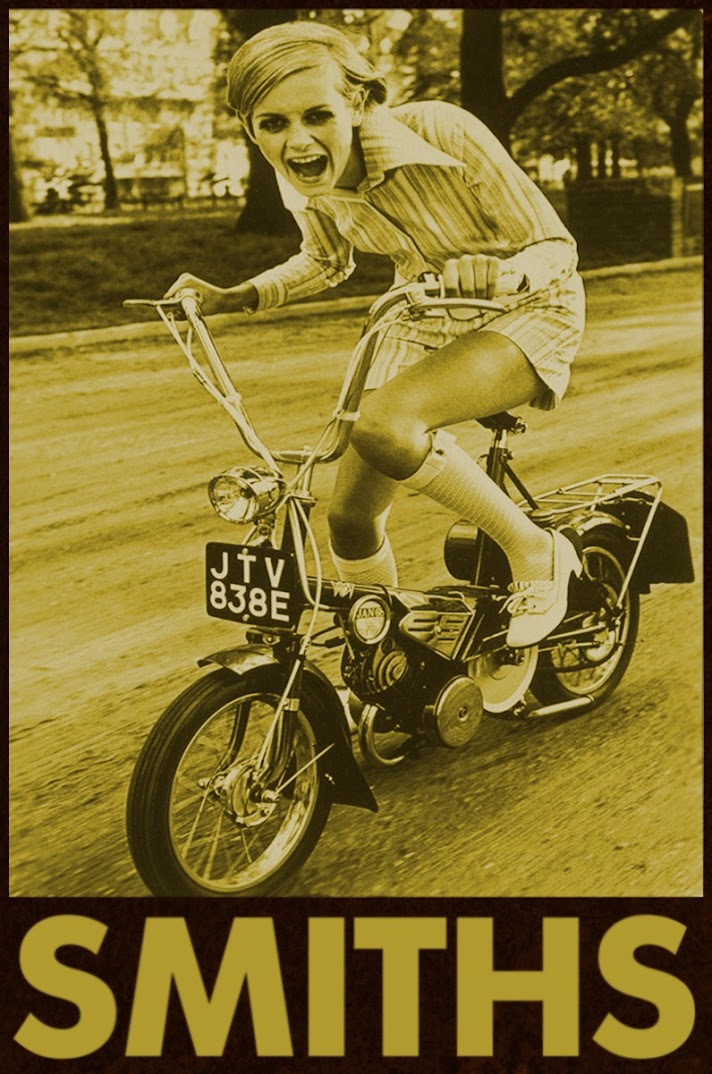
It's Time To Talk About The Smiths


There is The Smiths, and then there is everything else.

So in case you have not heard, Morrissey has cancer, which basically sucks. It's not that I'm being selfish or anything, like I just want him pumping out new music forever. I just hope he gets better.

I still listen to The Smiths all the time. They are, by far, my favorite band of all time. Over the decades of my music-listening adventures, my tastes changed wildly. I started listening to music of my parents generation—60s and 70s music. In The Year 2525. Even some 40s and 50s music, like Hound Dog. Then there was all the pop crap that I absorbed through osmosis in the 80s, mostly stuff I sort of hated at the time that I somehow enjoy listening to now. Belinda Carlisle. Foreigner. Journey. Somehow this stuff became stuck in my head and I enjoy it now. I don't fight it, I just go with it. In the face of the auto-tuned crap from today, Belinda Carlisle looks like Mozart now.

After a brief stint with some heavy metal like Iron Maiden, which attracted me more with its cover art than its music, I left my local school district and went to art high school in Manhattan. At my high school, I was exposed to more progressive music. The Smith's Louder Than Bombs was the first album I bought at Tower Records. After that I was hooked. Heavy meal vanished for me and was soon replaced by The Cure, Depeche Mode, Cabaret Voltaire, New Order, Big Audio Dynamite, and Fishbone. There were lots more too.

After high school I delved into darker, harder music. Bauhaus. Then industrial bands like Front 242, Ministry, Skinny Puppy, Nitzer Ebb, Einstürzende Neubauten all filled up my ears.

After college my younger brother introduced me to Led Zeppelin and Pink Floyd beyond just The Wall. Then came techno music. Aphex Twin. The Orb. After that was Smashing Pumpkins. Nirvana. Then came Portishead. Massive Attack. Thievery Corporation.

Throughout all of this there was always The Smiths. Even when I foolishly gave away all my Depeche Mode CD singles to some jackass (who probably does not even have them anymore) I never dreamed of giving away my Smiths CDs. I eventually stopped listening to hard industrial music. I rarely put that stuff on anymore.

I am always listening to The Smiths. Always. They never get old. I never get tired of hearing them.

Someone once asked me—referring to The Smiths—why do I like "listening to music that makes me what to slit my wrists?"

I just brushed it off, unable to give an in-depth response then. Now I'd say that The Smiths music runs that fine line between happy and sad. Life, if you are living it correctly, should often have you in poignant moments where laughter and crying are wrestling with one another in your head. The Smiths feel that way to me—the melancholy that comes from extreme happiness or the way sad moments are so bleak because of the happy times in contrast.

The Smiths songs make me happy. They may be melancholy, but that is far more than I can say for much of the other trite pop junk I also enjoy. Much of what I enjoyed from other groups was just vapid songs with clever melodies. The Smiths were more like Bob Dylan, poetic lyrics that have a soul, and music too. Kind of a sad-happy.

The Queen Is Dead was named the greatest album of all time by New Music Express, or NME. Many might not agree. Still, The Smiths have obviously left a big mark on the music world.

I hope Morrissey gets better just so he can live out his years and enjoy some down time. He's already given us so much.

This is one of my all time favorite songs by The Smiths. I know it's Over.

The Queen is Dead

Skylanders Trap Team Review (by my 7 year old)

This is a guest post from my 7-year old, ultra-amazing son.

"The game is awesome. The Screamer was necessary to be in this game, but that is fine. The Doom Raiders have every element except magic, which would be cool in the game. On the poster there are question marks, which are two new elements. That is weird. Wouldn't they put everything in before the game comes out? The lock puzzles got insanely hard. It took like 20 minutes to get through. The Chompie Mage was in Skylanders Giants. He did not go to jail at the end of Giants. He was in the credits.

I am glad the Gulper is the only villain you don't fight. Crank Case is Spy Rise's dad, and he fights his own son. The villains don't die until the time runs out and you turn back into a Skylander. Broccoli Guy and Buzzer Beak were trappable, but I could not trap them. I liked the noise Shortcut makes."

Thanks for reading.


Wednesday, October 8, 2014

Adam's Horror Film Picks For Kids

Can a kid watch a horror film? Hell yes! It is perfectly legal to take your kid to an R-rated film. Under 17 requires accompanying parent or adult guardian (age 21 or older). Every kid is different, though. You need to know your own kids and what they can and can't handle. Some kids can't handle much. That's fine. There is no media I have found yet that will undo good old-fashioned parenting.

So until your kids can sit and watch The Exorcist without crapping their pants, here is a good solid list most kids should be able to handle.


It's The Great Pumpkin Charlie Brown. This is not a film but if you don't start here, well, you might want to reevaluate why you had kids in the first place. Peanuts in any form should be the cornerstone of any serious child-rearing a parent embarks on.


Wallace & Gromit The Curse of the Were-Rabbit. This film is a masterpiece pure and simple. It is my favorite Wallace & Gromit film and also the most clever work created by Aardman Animations. The film operates on multiple levels, able to satisfy both adult and child side-by-side with finely-honed humor. Criterion should seriously consider this for inclusion in their catalogue. 


The Nightmare Before Christmas. This is the Cadillac of holiday films. Tim Burton's masterpiece is a Halloween film that blends in Christmas as holidays collide. This film was a classic the moment it came out. No childhood is complete without this film.


Monster House. This is one of my all time favorite seasonal Halloween films. I never seem to get enough of this film and it's one of the few from this batch I'll watch year round. The story, humor, animation, style, music, and acting is all exactly my taste and I'll be singing this film's praises till the day I die. We need more films like this. 


Coraline.  I read the novel to my son when it came out. Once the film came out we were all over it. While book and film do not perfectly mirror one another, they are both above par works that should both be experienced. 


Paranorman. This is a good solid Halloween film for kids. It borrows heavily from The 6th Sense, but that's fine. It retools the basic premise enough that it stands on its own as a fun-filled kids spook film. 


Corpse Bride. This film is many notches below Burton's Nightmare Before Christmas but it is still a good fun film. 


Abbott and Costello Meet Frankenstein. You should be showing your kids Abbott and Costello. At the very least, show them this. This is a good film to begin to cross the threshold from kids' horror to young-adult horror. The fact that it is old and black and white with dated special effects will help any kid enter live-action scary/horror/spooky films. 


Ghostbusters. Eventually everyone must watch Ghostbusters. If you are 13 and you have not seen it yet, sit your parents down and ask them why this has been omitted. 


E.T. and Poltergeist. It's rumored that Speilberg directed both of these films at once. It does not feel like Tobe Hooper directed Poltergeist. They seem shot in the same area of California, too. E.T. is the space-kids tear-jerker. Poltergeist is the safe-suburbia haunted house film. These are both for sophisticated kids. Try 7 years old and older for E.T., depending on your kid. 10 and older for Poltergeist. I was 12 when I saw it because that's when it came out in the theaters. 


Beetlejuice and Edward Scissorhands. These films are both very much a tween/teen films. The humor is sophisticated and the films will lag for younger kids even though they are not particularly terrifying. If other Burton films have been tackled then these are both a good next step. 


Something Wicked This Way Comes. I love this film. It is dated now for sure and may land softer with today's kids as a result. Still, it can be genuinely scary and should be administered with caution to only older kids. 


The Birds. Hitchcock needs to be fed to a teen at some point. This is a great place to start. Unfortunately there is so much character development going on here that today's kids might be bored to death. I suggest this film be administered with the lights out and no distractions. A family night to introduce a more sophisticated type of film. Once someone is fed Hitchcock properly they will always be the better for it. 


Carrie. The original only. Stay as far away from the Chloë Grace Moretz 2013 version as you can. It's horrible. The original is raw. The original has teen nudity, back before this country became afraid of its own shadow. A whole host of famous actors are in this too. Sissy Spacek and John Travolta. Piper Laurie too! This is graduation. Once you see this you get your diploma. For sophisticated mature teens only. 

Enjoy!


Monday, October 6, 2014

Adam's Obscure October Horror Film Suggestions

It's October and that means you should be watching nothing but horror films! Every year at this time, I pull out all my old favorites such as Halloween, The Thing, Exorcist, and Texas Chainsaw Massacre. Everyone's probably familiar with those, right?

Here's a list of some more obscure films as possible suggestions to help add some variety to your horror season. This list is by no means meant to be all-inclusive or exhaustive in any way. It is simply my short list of suggestions. Some are great. Some suck and are great because of that. Some are just off-kilter enough to be fun.


Nosferatu and Shadow of the Vampire. First up is Nosferatu, the classic 1922 silent vampire film by F.W. Murnau, and the modern, fictionalized, behind-the-scenes making of Nosferatu, Shadow of the Vampire, by E. Elias Merhige. Both films need to be watched back-to-back in whatever order you chose. They are both masterpieces, each singing across the gulf of cinema to one another. Both are on Netflix streaming now!


Begotten. You will need to track down Begotten on Amazon or Ebay. This is the first film by E. Elias Merhige, the same director who did Shadow of the Vampire. I can safely assume that not only have you never seen it, but you have also never seen anything like it. 


Berberian Sound Studio. Not to be missed, Berberian Sound Studio is a cinematic love letter to horror films in general. In addition, it also shines a light on the importance of sound in films as well as the hidden beauty related to the dying art of traditional filmmaking. Berberian Sound Studio is a like a Russian nesting doll that offers up surprises as it goes. The last time I checked, this was still on Netflix streaming. 


The Dunwich Horror. The Dunwich Horror is an old horror film from 1970, loosely based off the H. P. Lovecraft story of the same name. Until this year I had never seen the film. Despite it's age, often poor construction, and many other hits against it, I still enjoyed it a great deal. With old horror films, their age and poor construction sometimes give them unintended charm. This film is a new old favorite. On Netflix now. FYI... there are a zillion old horror films on Netflix now. I don't have the time to check them all out. Any recommendations? Please post! 


Cthulhu. Continuing with the Lovecraft films is Cthulhu. The film is a slight adaptation of the Lovecraft story, The Shadow Over Innsmouth. The film is often foolishly overlooked because the main character is gay. This film is not great, but it is still one of the better Lovecraft-styled films I've seen. I keep coming back to re-watch it every year since I've seen it, and that is reason enough to list it here. You can easily track this down on Amazon. 


The Midnight Meat Train. The Midnight Meat Train is not that obscure, but just in case I'm listing it here. I read the Clive Barker short story while riding on the NYC subway on my way home from high school in Manhattan in the 80s. The story taking place on the NYC subway stuck right in my gut as I read and rode. I'm rarely spooked, but this short story had me looking up and glancing at the real life wackos on the subway.  The film does not disappoint at all. And Leon is shooting with a Leica as he roams the NYC subway. Vinnie Jones as Mahogany is perfectly cast. A must see. 


Beyond the Black Rainbow. I'll end here with a new favorite. Beyond the Black Rainbow was made as if it was an obscure film from the 1980s that was lost or somehow overlooked. It's a beautiful film in every way I can think of. A gorgeous fever dream that keeps on giving with a great cast, soundtrack, photography, story, and more. I can never seem to get enough of this new old classic. Buy the blu-ray on Amazon. Here is my Beyond the Black Rainbow review that I posted here on WizardsNeverWearArmor.com a while back. 


Mindflesh. Here is one more to keep you busy. Dig this out and you will not be disappointed. 

Enjoy October. 

Enjoy fall. 

And enjoy Halloween. 

Feel free to list your own obscure horror favorites here in the comments section. 

As always, thanks for reading.

—Adam